

Salt and Peppa-tide: seriously, what are peptides?
I'm sorry or you're welcome.

[Author’s note: To listen to this in podcast form, click the play button above. Also, this post does not constitute medical advice and is for informational purposes only.]
“Peptide” has become a buzzword in the past year. I think that stems from the following beliefs:
“GLP-1s are miracle drugs, and since GLP-1s are peptides, we must be just scratching the surface.”
“Peptides are sold on the gray market and are therefore anti-big pharma. I am also anti-big pharma, so I’m here to stoke the peptide fire and fix my bod.”
“My neighbor is on something called the ‘wolverine peptide stack,’ and she said she rapidly recovered from elbow surgery while also losing 12 pounds of visceral fat and her skin is glowing and I feel FOMO and should seriously research this.”
Even if you’ve only heard the word “peptide” in passing, or your awareness is limited to “Ozempic sounds like it’s doing well, though I don’t know how it actually works,” it’s safe to make three upfront claims:
The recent hype from influencers obscures the fact that peptides are a basic component of human life. And sunflower life, dog life, and bacterial life. In other words, they are not a new miracle drug that recently emerged from Chinese labs to piss off the FDA.
Peptide popularity is not going away because—independent of the peptide hype—a new era of personalized medicine is afoot thanks to CRISPR, whole-genome sequencing, AI, etc.
It’s vital to start from the lowest possible level, the reinforced-concrete basement floor, to gain an intuitive understanding of where peptides fit into human biology. That makes it easier to make wise decisions and to change our minds as the data change.
Here are the sections:
I. Peptide?
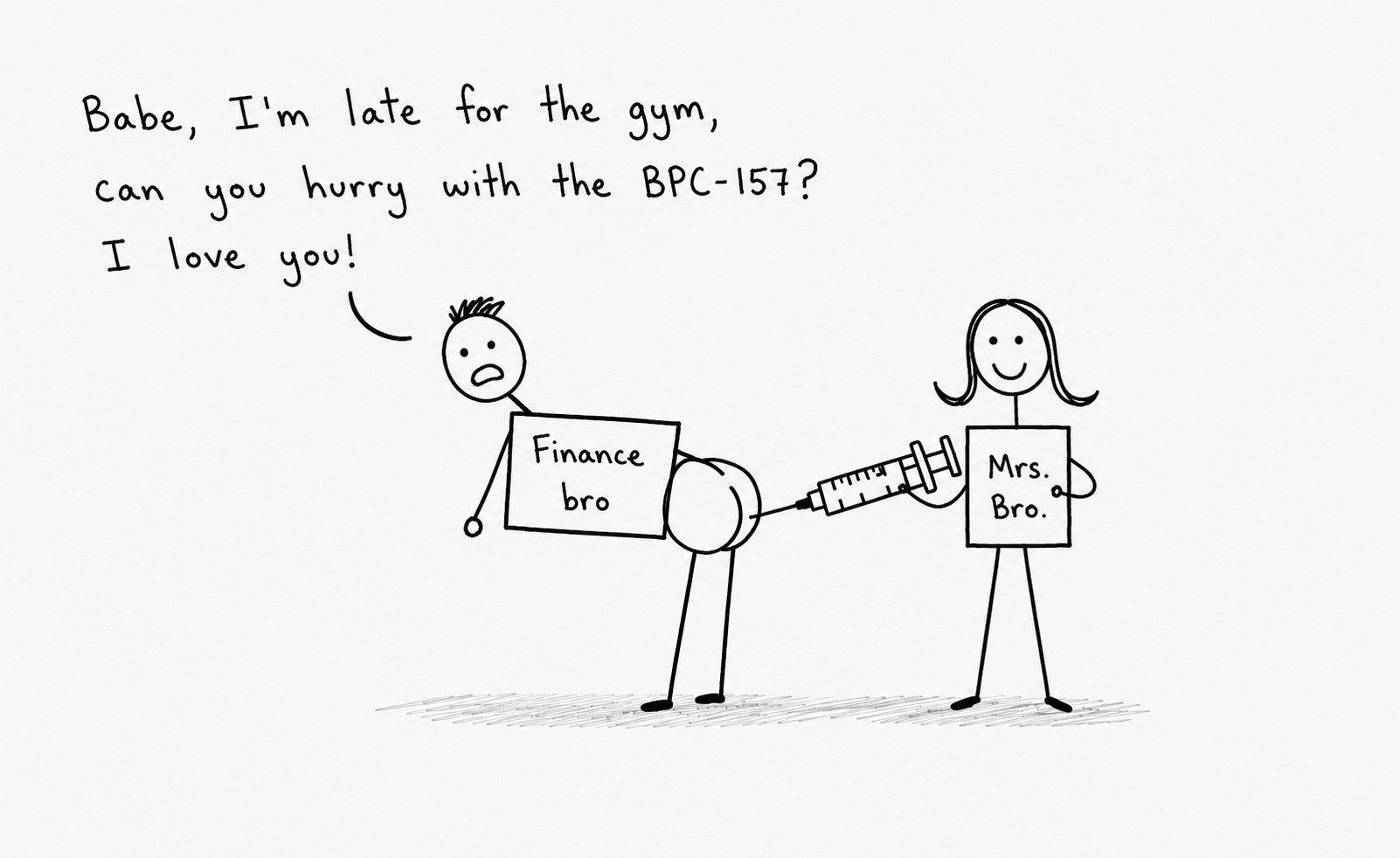
II. I’d prefer to not inject this in my buttocks, or, why peptides are rarely pills
III. Incentives, the FDA, and gray markets
IV. Making informed decisions (and two abridged examples)
V. Conclusion: Paxton’s opinion on peptides (Po-op)
I. Peptide?
Writing this essay was humbling. Despite having multiple doctors in my immediate family, I’m willing to admit that when I began my research, I couldn’t remember if a cell or a protein was larger.
But my compulsiveness prevailed and—after enough biology and chemistry 101 questions for the LLMs to deplete the resources of a small village—we’re ready to start from the bottom, beneath the layer of TikTok hot takes.
The veeery bottom.
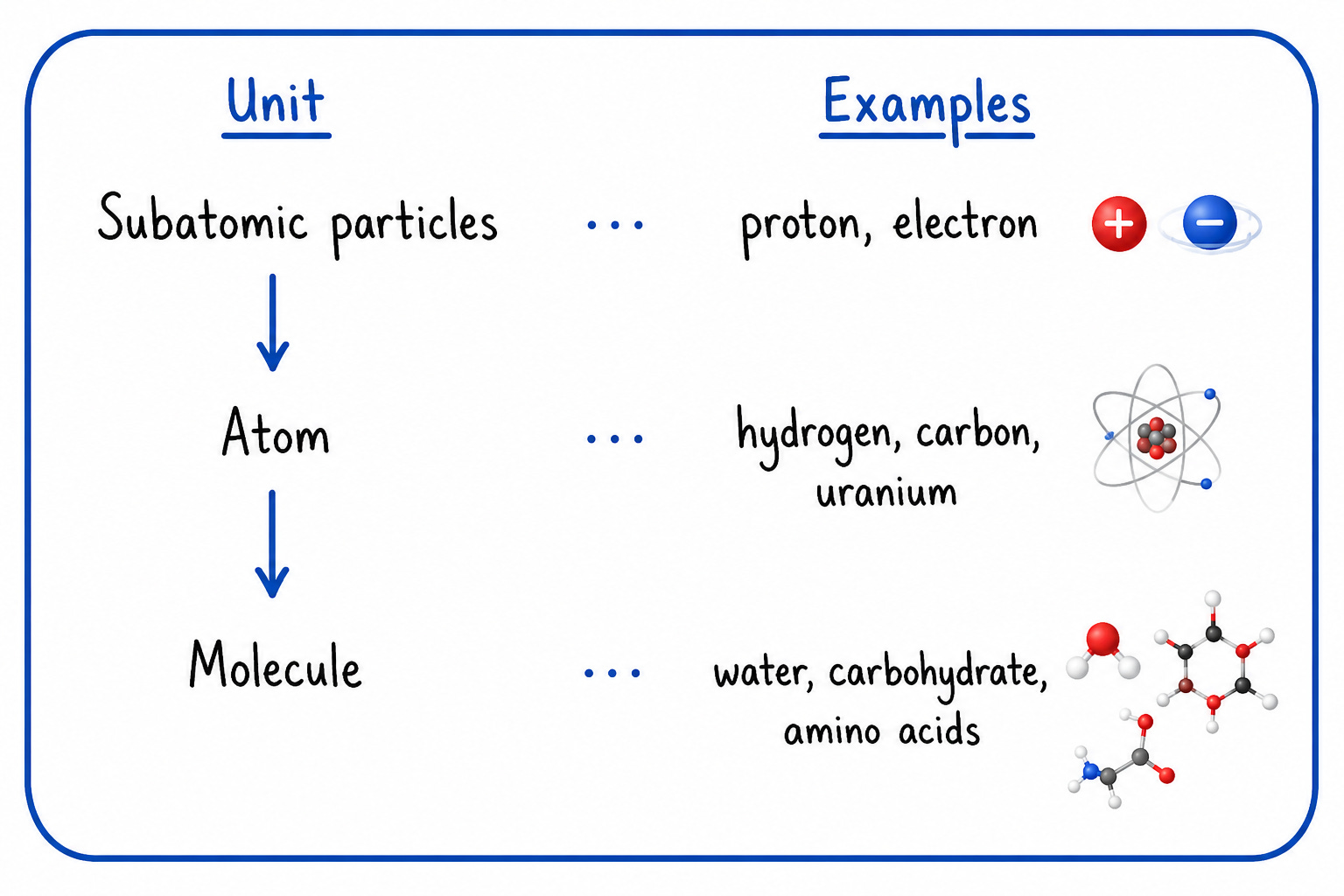
Amino acids—not to be confused with the coconut aminos that you can sub for soy sauce—are one type of molecule that sustains life. Other critical molecules include water (we’re 60% water), nucleotides (forming DNA, RNA, and ATP), carbohydrates, lipids, etc.
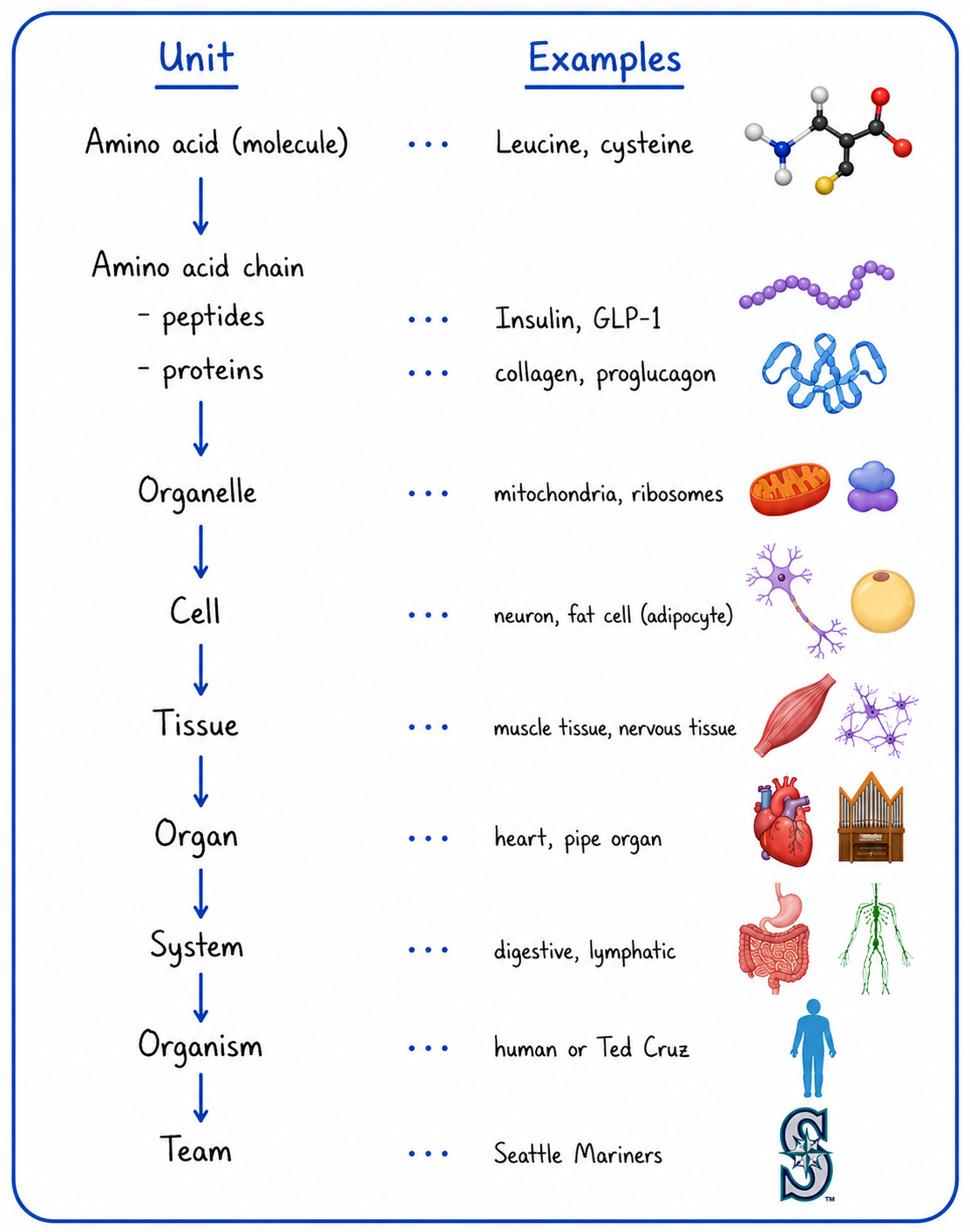
Chains of amino acid form peptides and proteins, which act as the molecular machinery of life. All human peptides and proteins are built from just 20 amino acids.1
Let’s stick to the amino acid emergence tower.
Peptides vs. Proteins
There are two types of amino acid chains: proteins and peptides, which are made of some combination of those same 20 amino acids. Peptides are shorter, describing a chain of between two and 50 amino acids. Biology doesn’t recognize this arbitrary distinction.2 A chain with 51 acids (like insulin!) is still considered a peptide (a polypeptide), and that’s roughly the cutoff where we call things “small proteins.”
As you add more amino acids and venture into protein territory, the amino-acid chains fold into highly complex structures to reach the lowest possible energy state. (Predicting how a protein would fold was largely a black box until AI—specifically Google’s AlphaFold 2—provided breakthroughs in 2020.)
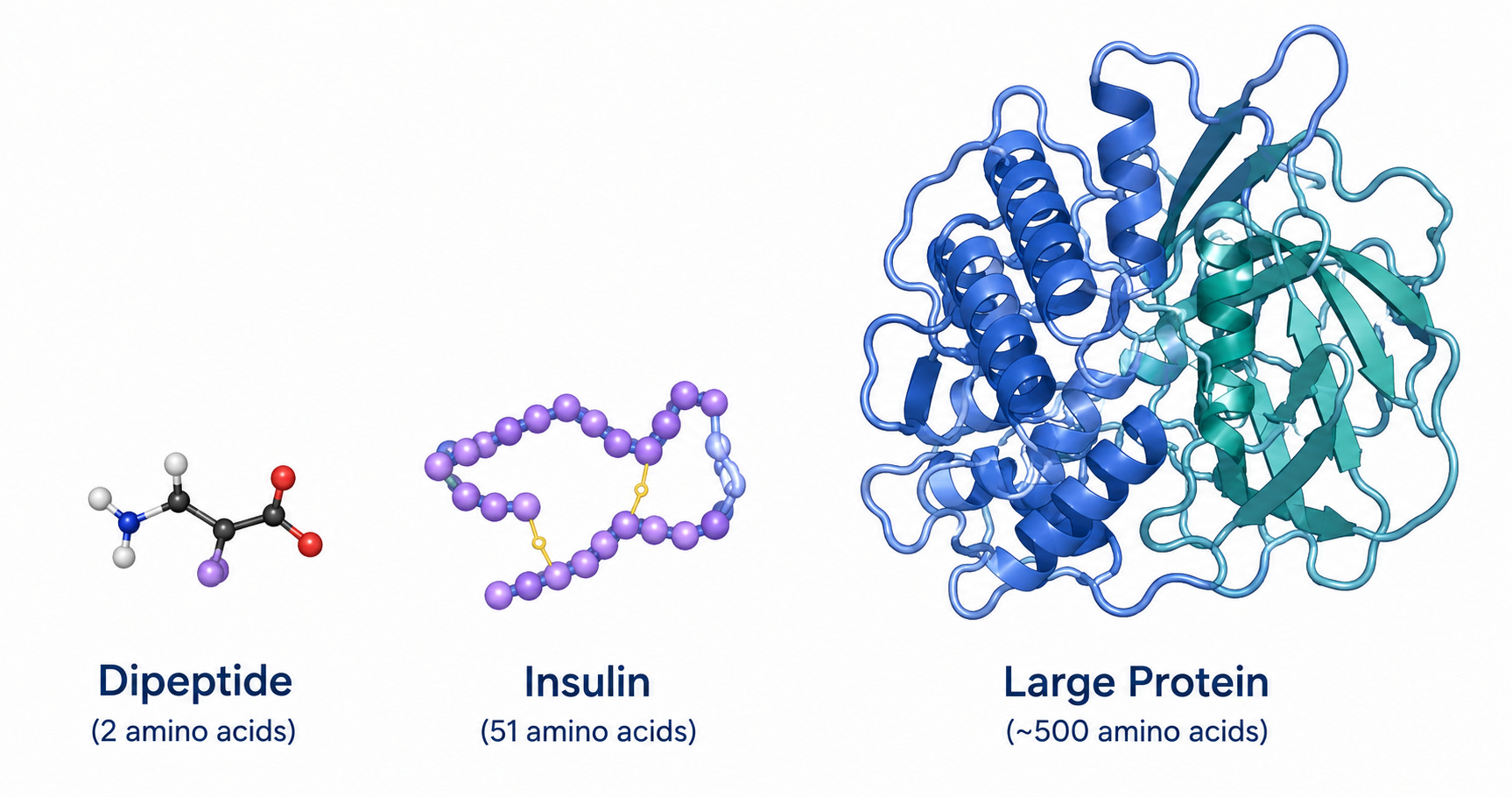
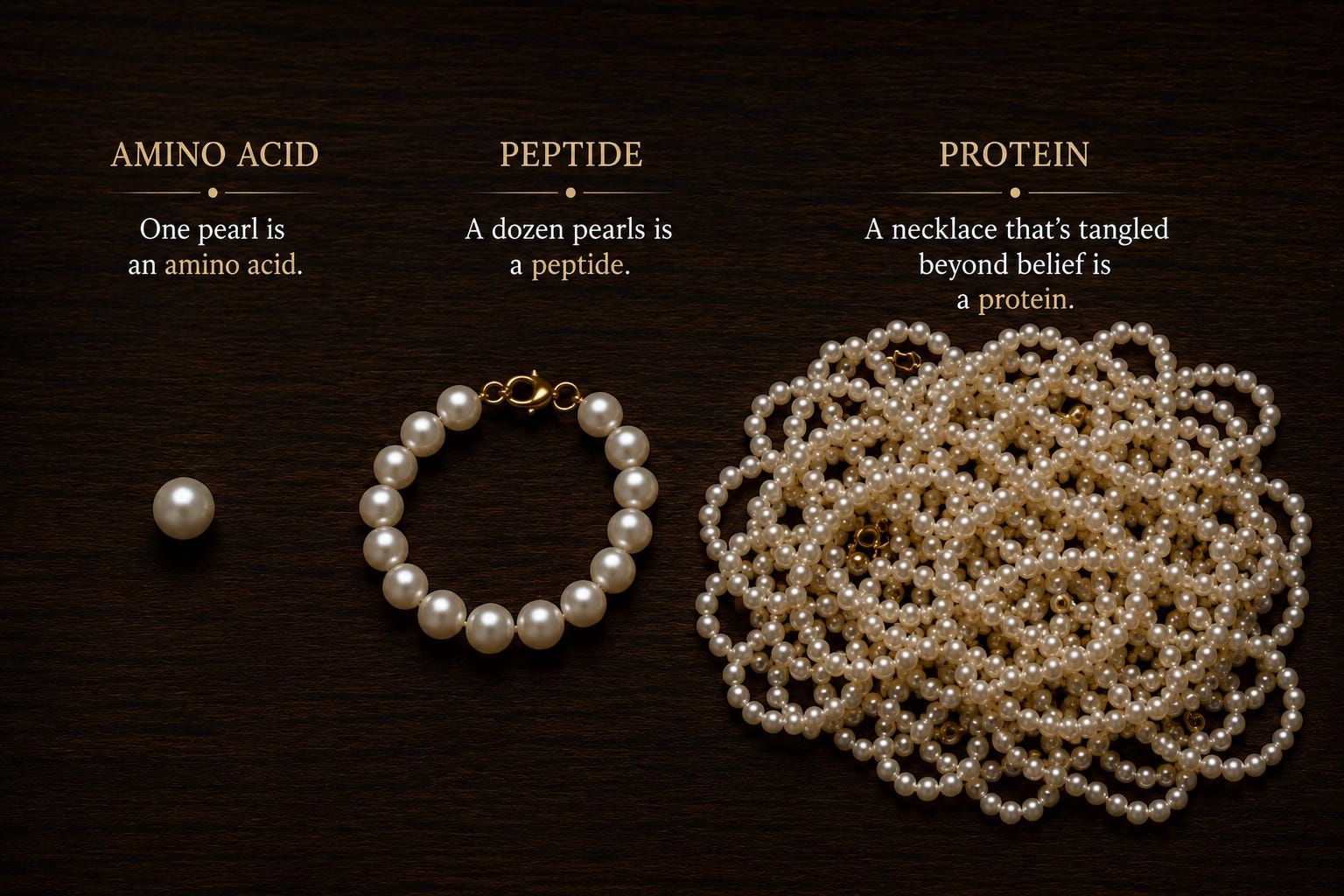
A memorable analogy is that of a pearl necklace. One pearl is an amino acid, a dozen pearls is a peptide, and a huge necklace that’s tangled beyond belief is a protein.
Structure versus function — a common error
Lots of peptide content defines “peptide” in functional terms, such as a “signaling molecule” or “messenger molecule.” Peptide, as seen in the pearl image above, actually describes structure, not function.
For instance, structural peptides like collagen tripeptide do not send signals, and as proteins break down in the body, they all become smaller, typically non-functional peptide fragments.
Functionally, only ~15% of the peptides that your body intentionally produces are messenger peptides, but any relevant exogenous peptide is likely a messenger, such as a hormone peptide.3
Most messenger peptides communicate information by binding directly to receptors. Agonists activate receptors, and antagonists block receptor activation. GLP-1, for example, is both a hormone (as a messenger molecule) and an agonist of the GLP-1 receptor that exists in cells of the GI tract, brain, pancreas, etc.
Paxton’s opinion on peptides (Po-op) I: peptides aren’t magic
Peptides are not a distinct category of drugs. They are short chains of amino acids that perform functions such as cellular communication (e.g. a hormone peptide).
Peptides exist endogenously in our bodies, though some people now inject exogenous peptides, beginning with insulin in 1922.
So if I’m not out here injecting Tylenol, why can’t I swallow my Ozempic?
II. I’d prefer to not inject this in my buttocks, or, why peptides are rarely pills
What happens when you eat a chicken sandwich or ramen or something fancy like a Crunchwrap Supreme?
The digestive enzymes of your stomach, like pepsin, begin breaking down the food. The sandwich’s dietary proteins—the type people mean when they say “eat X grams per day” type of protein—are made of large amino acid chains just like the proteins that our cells’ ribosomes constantly produce. The dietary proteins break down into peptide fragments and then amino acids, which are absorbed through the intestines, enter the bloodstream, and are taken up by cells to build into peptides and proteins.
This process is relevant because it’s why a peptide pill or peptide powder don’t work well by default. A GLP-1 pill that you digest would be treated like any other amino-acid chain that enters the gut.4
Medications like ibuprofen and aspirin are way, way smaller—just a few dozen atoms per molecule—so they enter the bloodstream with ease and aren’t the target of digestive enzymes the way that an amino-acid peptide is.
III. Gray Market, Eroom’s Law, & FDA Incentives
While it’s currently en vogue to champion peptides as an anti-Big-Pharma alternative, the picture gets more nuanced the deeper one dives into both peptides and the labyrinth that is the American drug system.
The Peptide Gray Market
A black market involves clearly illegal transactions, like selling heroin to middle schoolers or counterfeit Ozempic to adults. A gray market exists in a fuzzier middle ground. Since it’s illegal to sell/market unapproved peptides for therapeutic use that are neither FDA approved nor exempt via compounding pharmacy rules, you’ll notice something like the following on most peptide labels:

This peptide is for research use only and is not approved for human use, but obviously we’re selling it to you so that you can self-inject.
The dangers of a gray market injectable are fairly obvious.
When a company markets an unapproved peptide for therapeutic use, it is breaking the law. Thus, gray-market sellers don’t talk about dosing or specific effects in humans, so people flock to Reddit or get tips from friends.
More concerningly, while the FDA has standards that an approved manufacturer must meet, these peptide-producing labs—often located overseas—that send you vials (to combine with bacteriostatic water and inject) are typically barely regulated.
Although some third-party testing companies analyze peptides from hundreds of different labels, every peptide batch is different, and peptides are significantly more complex molecules than most over-the-counter drugs. Plus, shipping and storage introduce additional contamination vectors.
We’ll talk about risk-reward tradeoffs in the next section, but the most glaring gray-market peptide risk is definitely the fact that they could be toxic, or at least not what you think you’re taking. There is a reason that lab molecules are not for human use.
To understand the origin of this gray market, we need a brief detour to examine incentives.
Eroom’s Law and the high bar for FDA approval
In 1965, Gordon Moore, Intel co-founder, observed that the number of transistors that you could fit on a computer chip was doubling every year (later revised to two years). The cost of compute was therefore declining exponentially, and this famously held true for about 50 years.
Moore’s Law backwards is “Eroom’s Law,” a term coined because the cost of FDA approval for a new drug is doubling every nine years. It now costs ~$2.6B to bring a new drug to market, as that price bakes in the cost of all the failed drugs and salaries and overhead for pharma companies.
How’d we get here?
When the FDA began under the progressive President Teddy Roosevelt in 1906 (as the Pure Food and Drugs Act), it did not resemble its 2026 version.5 Justin Mares provides a succinct etiology of the current FDA:
In 1956, a pharma company called Richardson-Merrell introduced a new drug called thalidomide to help pregnant women with morning sickness. Like many pharmaceuticals, this was a novel small molecule: a compound no human body had ever encountered in history. Within years, 10,000+ children were born with birth defects linked directly to the drug, and thalidomide then became the most infamous drug disaster in history.
You’d think we would have learned something fundamental from that tragedy. And in some ways we did: thalidomide led directly to the modern FDA approval process.
For a pharma company to recoup the billions they spend developing drugs, they need a lengthy legal monopoly (i.e. a patented drug like Ozempic) and a sufficiently high price to become profitable.6
Pharma companies cannot patent a naturally occurring molecule, such as the GLP-1 peptide that exists in our bodies. Thus, companies search for novel molecules, and since they are alien to human bodies, safety trials are expensive and long.
Thus, a good-faith defense of the peptide gray market typically goes something like this:
Since pharma companies cannot patent naturally-occurring molecules, there is no systemic emphasis on exercise, diet, sleep, or a naturally-occurring supplement or peptide.
These gray-market peptides therefore fill a need of promising molecules that are excluded from Big Pharma and its safety research.
Po-op II: the peptide “market gap” is overstated
It’s true that we overlooked the weight-loss potential of GLP-1s for 20+ years prior to semaglutide’s FDA approval. Countless lives would have been saved in the counterfactual.
Yet, the fact that we have the word “semaglutide” at all is evidence that the peptide “FDA incentive problem” is grossly overstated.
GLP-1 exists naturally, but Novo Nordisk’s patented semaglutide drugs (Ozempic/Wegovy) are customized analogs of the body’s GLP-1 peptide. They are engineered to last a week, while the body’s version lasts two minutes.
Even the biggest Big Pharma hater would concede that these companies, if nothing else, are phenomenal profit seekers. If a peptide has therapeutic promise, a company will invent an analog and begin trials.
To be clear, we definitely do need more peptide research and better human trials, but peptides are simply not ignored outside of the gray market. There are currently ~150 peptides in clinical trials, and the rapidly-growing market is already estimated at ~$160B.
IV. Making informed decisions
Some exogenous peptides are exact copies of those that exist endogenously (like human insulin), some are analogs of endogenous peptides (such as semaglutide), and some are fully synthetic.
The diversity within this huge category is why questions like “are peptides good or bad?” are meaningless.
Given the dozens to hundreds of peptides that will be peddled to you in the coming years, it’s far better to have a framework for decision making that you can return to rather than having to decide which 25-second-Reel hot take is most convincing.
The best jumping-off point is this chart that I’ve taken directly from Dr. Peter Attia’s peptide deep dive.
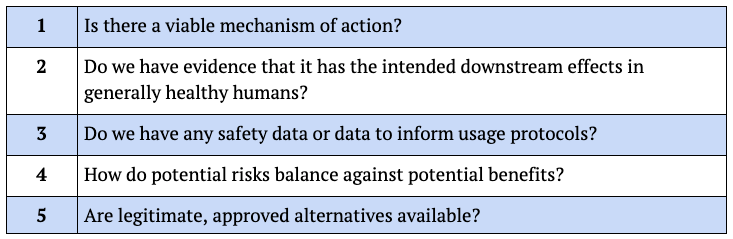
Rather than talk through this chart academically, let’s take a very non-thorough look at two examples, semaglutide and BPC-157.
Semaglutide example
Is there a viable mechanism of action? Yes
Semaglutide activates the GLP-1 receptors throughout the body (e.g. in the stomach, brain, pancreas, etc.). These receptors activate signaling pathways that lead to satiety, so weight loss is primarily the result of decreased hunger signals. It’s not magic: people literally eat less and lose weight.
Do we have evidence that it has the intended downstream effect in generally healthy humans? Yes
The weight-loss numbers are staggering. It’s 2026, so the data by now is neither surprising nor difficult to find.7
Do we have safety data to inform usage? Yes
Thousands of subjects in Phase III trials, and now millions in the wild.
Potential risks versus benefits
There are known short-term risks like GI issues, and occasionally more severe symptoms like pancreatitis. I also believe people’s anecdotal reports about mood shifts and similar observed effects, as very long-term data is still decades away. That said, the health benefits of not being highly overweight tower over the risks of these drugs.
Are legitimate, approved alternatives available?
These are already FDA-approved drugs, and non-peptide oral versions like Eli Lilly’s Foundayo are now on the market.
BPC-157 example

For context, many users of BPC-157 claim that it provides gut healing/protection, as well as accelerated soft-tissue repair, often following injury. Hence its inclusion in the so-called “Wolverine peptide stack.”
Is there a viable mechanism of action? None proven
BPC-157 is a synthetic peptide. BPC stands for “body protection compound,” and although the larger protein it derives from debatably does exist natively in gastric juice, there’s no clear evidence that BPC-157 does, contrary to what people online say.8
More importantly, there is no proven mechanism of action in the same vein as GLP-1 → activates GLP-1 receptor.
Do we have evidence that it has the intended downstream effect in generally healthy humans? Nothing beyond anecdotes
There was a study involving rats that showed promise, as well as in human cells ex vivo (in a lab). Everything involving humans is limited to anecdotes.
Do we have safety data to inform usage? No
People mostly inject gray-market BPC-157.
Potential risks versus benefits
We simply lack real human data. Cell and animal models do not always conveniently scale to humans. If they did, it would not cost $2.6B per FDA-approved drug.
The following is a reasonable take considering BPC-157’s purported benefits have completely shifted over the past decade, and the team that patented BPC did not complete human trials: “For a drug that has been around for 30 years with such grandiose claims, even a low quality single [human trial] cannot be that high a bar to clear.”
Are legitimate, approved alternatives available?
No. But also yes, if you look at the market for placebos.
Po-op III: on semaglutide and BPC-157
Semaglutide and its successors (e.g. retatrutide) are revolutionary peptide analogs. BPC-157 has no real human-trial data. Given BPC has been around for decades, during which pharma companies could have conducted human trials, it is most likely a snake-oil placebo peptide that’s riding the coattails of actual effective peptides. I could be proven wrong in the future, but there is no current evidence supporting that.
V. Conclusion
If you’ve read this far, hopefully you now have a better understanding of what peptides are, why injection is typically required, how sellers use the gray market to avoid FDA rigor, and how to apply a coherent framework to form opinions and quickly spot BS.
Any peptide has the potential for therapeutic benefit until there is evidence that it’s harmful or simply does nothing; but that alone does not mean you should start injecting gray-market peptides.
Absence of FDA approval does not mean we should believe all snake-oil salesmen.
Final Po-op: on peptides
Google DeepMind’s 2020 breakthroughs using AlphaFold 2 to predict protein folding accelerated the future of drug design and personalized medicine. As hundreds of peptide drugs enter clinical trials, GLP-1s will not be the final world-changer.
In the meantime, opportunists and the influencers they pay will continue portraying peptides as a new wave of cutting-edge breakthroughs, but most peptides—especially those from the gray market—badly fail the risk-reward calculus.
An exciting future awaits, but my non-medical, don’t-sue-me advice is that the skepticism bar for any given peptide should be very high.
There is technically a 21st acid called selenocysteine that’s used in only 25 total proteins.
Peptide versus protein is similar to “pond” versus “lake.” Nobody would call Lake Michigan a pond, but that manmade “lake” in the suburban development is probably a pond. That fake pond is basically Ozempic, a synthetic peptide.
Exogenous just means you’re adding it to your body, even if it already exists endogenously, like insulin does.
Novo Nordisk (the makers of Ozempic/Wegovy) now have highly-engineered GLP-1 pills that are meant to evade digestive enzymes, but they are more restrictive than the weekly injection is. For example, you have to take them daily on an empty stomach with minimal water and wait before eating.
Much more interesting is the recently-approved, small-molecule, non-peptide drug from Eli Lilly called Foundayo that has fewer restrictions and is very effective targeting GLP-1 receptors.
Interesting to maybe only me, Teddy was separately fed up with the number of fatalities in college football, so he convened a bunch of football leaders, which shaped the direction of the American football that we know today.
For the sake of some brevity today, we’ll exclude the debate about how much profit a pharma company should be allowed to make on drugs that keep humans alive, given the healthcare affordability and medical debt crises in modern America.
Of note, second-generation “GLP-1” peptides like tirzepatide and third-gen peptides like retatrutide are even wilder (retatrutide is on par with bariatric surgery).
There has also never been a full published sequence of the parent protein. There’s a lot of murkiness here.